- News
- Printing, Screen Printing, Workwear
For decades, women entering trade, construction, logistics, and other physically demanding industries were handed a men's garment and told to make it work. A jacket three sizes too wide. Trousers designed for a different body entirely. Safety gear that was technically compliant but practically useless.
That era is ending. Across the UK, employers are waking up to the fact that women's workwear requires dedicated design, proper fit, and genuine consideration. The shift is not just cultural. It is now backed by legislation, new British Standards, and growing evidence that poor-fitting PPE puts workers at real risk. For businesses that want to attract, retain, and protect their female workforce, investing in custom women's workwear is one of the smartest decisions you can make.
This guide covers everything you need to know: the legal context, the performance case, the best products currently available, and the practical steps for getting your team kitted out properly.
Why "Unisex" Doesn't Work
The term "unisex" sounds inclusive. In workwear, it rarely is.
Historically, PPE and workwear have been designed around the proportions of an average European male body. Women were simply offered smaller sizes of the same garment. [1] A 2016 survey by the Trades Union Congress (TUC) found that only 29% of women in the workforce were wearing PPE specifically designed for women. The same survey confirmed it is commonplace for companies to procure men's PPE for women and simply order it in smaller sizes.
The consequences of this approach are well-documented. A peer-reviewed study published in the National Institutes of Health found a statistically significant link between women suffering more with poor PPE fit than men across multiple garment categories. [2] Over four times as many women (54.8%) as men (13.3%) reported their gowns being too large. When it comes to high-visibility outerwear and industrial gear, the same patterns emerge.
Poor fit creates specific hazards. [3] The Health and Safety Executive (HSE) states clearly that employers must "select equipment that suits the worker — consider the size, fit, compatibility and weight of the PPE and the physical characteristics of the user." The HSE goes further, noting that "modifying PPE to fit is not a suitable solution" and citing a specific example: coveralls with sleeves that are too long can increase the risk of entanglement.
The message here is practical and direct. Gear that does not fit does not protect. For women, that risk has been systemic and persistent. Addressing it starts with sourcing workwear designed specifically for them.
The Legal and Regulatory Landscape
UK employers have clear obligations here, and those obligations have recently been strengthened.
The [4] Personal Protective Equipment at Work Regulations 1992 (PPER 1992), as amended by the PPE at Work (Amendment) Regulations 2022, place a duty on every employer in Great Britain to ensure "suitable PPE" is provided to workers who may be exposed to health or safety risks. The 1992 regulations explicitly state that PPE is only "suitable" if it takes into account "ergonomic requirements" of the wearer. Where PPE is deemed necessary following a risk assessment, it must be provided free of charge.
From 17 September 2025, updated government guidance makes it clear that providing PPE in the correct sizes and fits for each individual worker is a compliance requirement. Procurement frameworks and tender documents must now reflect this. This change aligns with the introduction of [5] BS 30417:2025, a new British Standard from the British Standards Institution (BSI) that provides guidance on inclusive PPE. While BS 30417 itself is not a mandatory legal requirement, it provides a recognised framework for demonstrating compliance with existing PPE legislation.
Under the Equality Act 2010, employers also have obligations around workwear and dress codes. According to the Government Equalities Office guidance on dress codes and sex discrimination, dress policies for men and women do not have to be identical, but standards imposed must be equivalent. Issuing women with poorly fitting workwear while men receive gear that fits correctly could constitute indirect sex discrimination. ACAS guidance confirms that employers should check their dress code does not discriminate against any protected characteristics.
For businesses operating in construction, logistics, utilities, and similar sectors, the compliance risk is real. Organisations such as the Considerate Constructors Scheme are already requiring inclusive PPE options. Contractors who cannot demonstrate inclusive procurement face audit risks and, in competitive tendering situations, may lose contracts outright. This is a clear sign that suitably fitting workwear is a necessity and we can help you.
The Power of Professionalism
Safety compliance is the floor, not the ceiling. Custom women's workwear delivers returns well beyond regulatory adherence.
When women wear gear that actually fits, they perform better. Movement is unrestricted. Pockets are accessible. There is no need to roll up sleeves, cinch waistbands, or compensate for poor construction. The result is a more capable, more confident worker. According to data cited by [6] Enfield Safety, over 40% of women in construction say ill-fitting workwear has harmed their career progression, and 57% say a poorly fitting kit has directly hampered their work.
Custom branding adds another dimension. Branded workwear that fits well communicates to employees that they are valued members of the team. It signals inclusion. For businesses focused on reducing staff turnover, that signal matters. It also presents a unified, professional image to clients and the public, reinforcing brand recognition at every job site, depot, and client meeting.
Top Picks for Performance
Hi-Vis Essentials: The Portwest PW3 Range
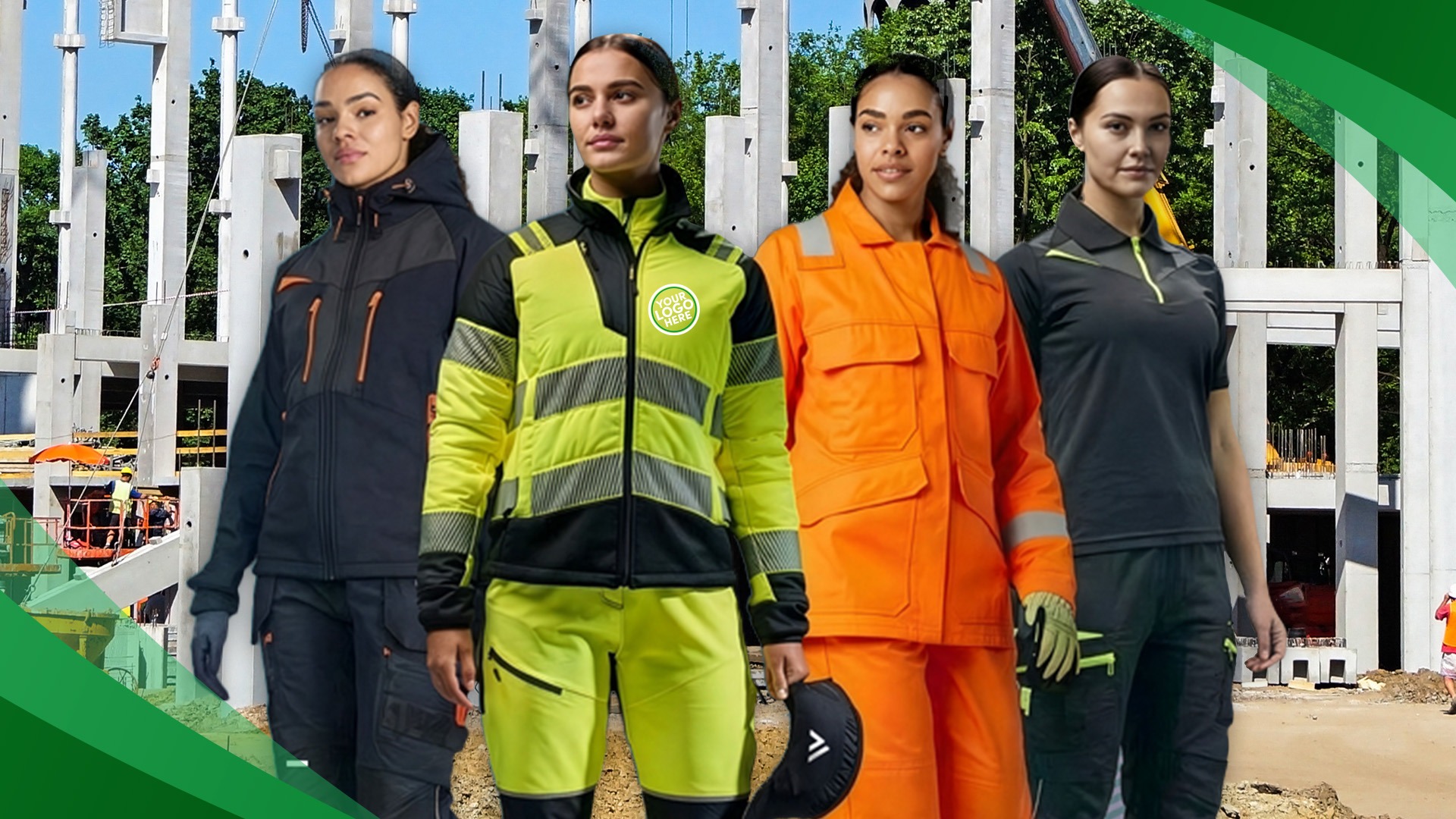
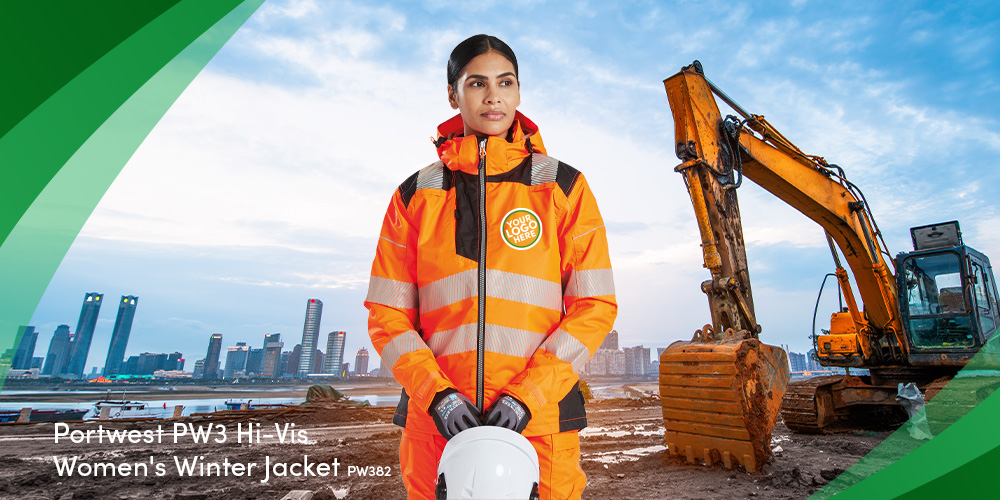
The Portwest PW3 range is among the most technically sophisticated women's workwear available in the UK. Every item in the range is designed and tested specifically for the female form, with features that go well beyond a scaled-down men's cut.
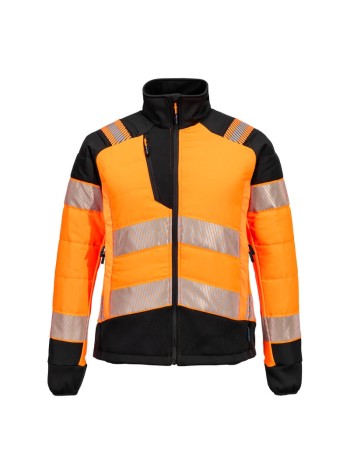
Portwest PW3 Hi-Vis Women's Hybrid Baffle Jacket (T171)
Built from durable soft-touch Ripstop baffle fabric, the T171 is water-resistant and ergonomically cut. Stretch panelling enhances freedom of movement, while padded panels provide warmth during colder months. Long double-puller side entry pockets allow easy access even when wearing additional layers. It is certified to EN ISO 20471 for high-visibility compliance and available in Orange/Black and Yellow/Black.
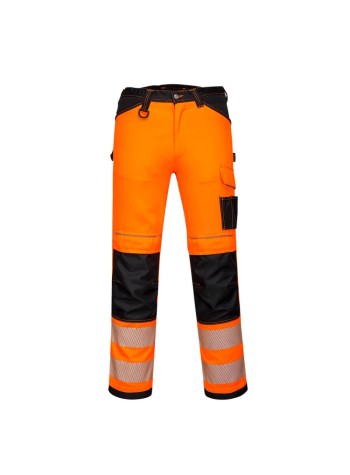
Portwest PW3 Hi-Vis Women's Stretch Work Trousers (PW385)
The PW385 uses a high-performance two-way stretch fabric (65% Polyester, 33% Cotton, 2% Elastane) that gives maximum range of movement without restriction. Key features include HiVisTex Pro reflective tape, top-loading kneepad pockets, a multi-way thigh pocket for secure storage of phones, keys and tools, and Oxford fabric reinforcement at high-wear abrasion points. The adjustable hem accommodates different leg lengths, and the side elastic waist ensures all-day comfort. Certified to EN ISO 20471 Class 2 and EN 14404:2004+A1:2010. A free pair of kneepads is included.
Versatile Layers: Gilet and Leggings for Every Environment
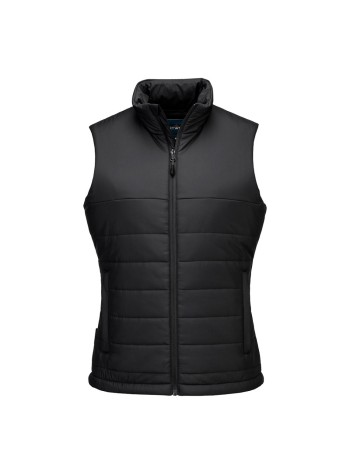
Portwest Professional Women's Insulated Baffle Gilet (S607)
Stylish, padded and insulated, the S607 gilet is ideal for customer-facing roles, depot environments, or as a mid-layer on site. It features a water-resistant finish to handle light rainfall and is available in Black, Navy Blue, and Metal Grey. Its clean design makes it an excellent canvas for corporate logo embroidery or printing.
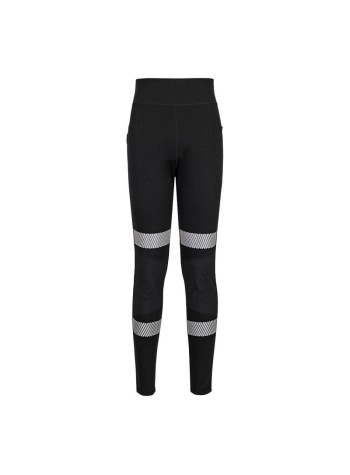
Portwest KX3 Enhanced Women's Flexi Work Leggings (KX381)
These leggings deliver genuine performance alongside comfort. Reinforced ripstop stretch panelling provides durability in high-abrasion areas, while a high-waisted fit ensures they stay in place even with pockets loaded with tools or a phone. Available in Black and Navy Blue, they suit warehouse work, utilities, and light trades.
Making the Switch: A Practical Guide
Transitioning to custom women's workwear does not need to be complicated. Here is how to approach it systematically.
1. Audit your current kit. Speak with female team members directly. Ask whether their current workwear fits correctly and whether it has ever restricted their work. The answers may be more significant than you expect.
2. Size properly before you order. Resist the temptation to guess sizes based on existing unisex orders. Run a sizing exercise and collect individual measurements. This is a service we offer, we send one our our sales people to your business to take down all necessary information that allows us to get you the perfect fitting uniform. Many women have been wearing the wrong size for years, simply because no one asked. Portwest PW3 trousers, for example, use waist sizing (26–38 inches), which requires proper measurement rather than a generic S/M/L estimate.
3. Specify inclusive PPE in procurement documents. Following the September 2025 guidance update, this is now a compliance requirement for many businesses. Reference [5] BS 30417:2025 in tender documentation and procurement frameworks.
4. Choose a brand with genuine women's ranges. Not all "women's" workwear is created equal. Look for garments designed and tested by women, not simply resized versions of men's products. The Portwest PW3 range explicitly states it is designed with a "specially designed fit for women." ORN clothing is another great option for those seeking "true" women's workwear.
5. Add your branding. Custom embroidery or print transforms functional workwear into a brand asset. A logo on a well-fitting, high-quality garment builds team cohesion and projects professionalism to clients.
6. Review regularly. As your team grows or changes roles, revisit your workwear provision. Build a buffer stock of women's sizes for new starters and seasonal changes.
Investing in Your Team is Investing in Your Business
Custom women's workwear is not a nice-to-have addition to your procurement list. It is a legal requirement, a safety necessity, and a genuine business advantage. Women who wear uniform designed for them work more effectively, report higher job satisfaction, and are more likely to stay with an organisation that treats their wellbeing seriously.
The products exist. The legislation is clear. The business case is strong. The only remaining question is how quickly you act on it.
GoCustom offers over 400 workwear styles designed for women, all available with custom branding. Browse our full range of women's workwear or get in touch with our team to build a solution that fits your people and your brand.